ITR-4 New Rule Requires Small Taxpayers to Disclose Investments for Better Income Tracking
ITR-4 New Rule Requires Small Taxpayers to Disclose Investments for Better Income Tracking
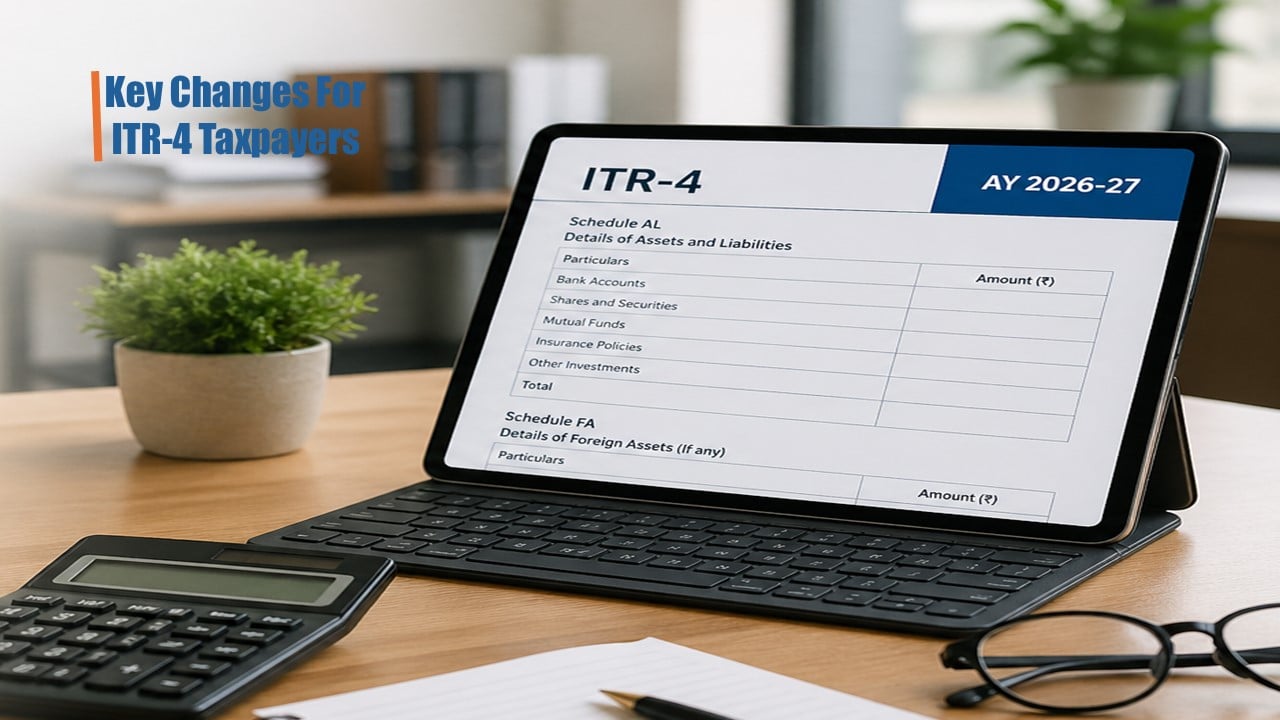
The Central Board of Direct Taxes has made a major change in ITR-4 (Sugam). From Assessment Year 2026-27, it will be mandatory for small businesses and freelancers to submit their investment information. Earlier, this was not necessary.
ITR-4 is for people:
- Individuals, Hindu Undivided Families, and firms, excluding LLPs
- Taxpayers earning up to Rs 50 lakh
- Those choosing presumptive taxation under Sections 44AD, 44ADA, and 44AE
What is the new rule?
Now, all the investments till March 31 will have to be mentioned in the “Financial Particulars of the Business” section.
These include:
- mutual fund
- fixed deposit
- share
- property
Purpose of the new rule
The purpose of this change is to create a complete financial profile of the taxpayers. It will also help the tax department check whether business funds are being diverted into investments. Now, small taxpayers will also come under the same scrutiny system that is applicable to big and salaried people.
What will be the effect?
Earlier, record-keeping was easier in the presumptive scheme. Now, complete records of investment will have to be kept. This may increase expenses and work, and some people may have to seek professional help from a CA.
What are the risks?
Giving wrong information can increase the problem. AIS and TIS already contain data. If the ITR does not match AIS/TIS records, automated notices may be issued.
Possible action:
- Investigation under section 143(2)
- Penalty under section 270A
Penalty:
- 50% tax penalty for showing less income
- Penalty up to 200% for giving wrong information
Now disclosure of investment in ITR-4 is mandatory. Therefore, keep correct records and give complete information while filing an ITR so that you can avoid a penalty.